Celebrate the End of National Literacy Month through the Power of STEM!
Written by Eileen M. Halpin
Designed by Eileen M. Halpin
Edited by Stevie Nault

Literacy is more than reading a book at bedtime; it’s the lens through which children make sense of the world. STEM literacy bridges the gap between language and discovery. When young readers dive into books about biology, mathematics, chemistry, and ecology, they aren’t just decoding words on a page. They are practicing critical thinking, building technical vocabulary, and learning to ask one of the most powerful questions in human history: Why?
At Science, Naturally!, our mission is to make science and math engaging, accessible, and fun for readers of all ages. To help you celebrate National Literacy Month, here are four reading pathways to build curious and confident readers.
Early Childhood Literacy
Early exposure to scientific vocabulary (like mammal, habitat, and adaptation) builds strong language foundations fosters empathy for living creatures.
Literacy development begins long before a child enters a formal classroom. For toddlers and early elementary readers, nonfiction picture books tap into a child’s natural fascination with the physical world and the animal kingdom.

The first title of The Beginnings Collection, If My Mom Were a Platypus, takes young readers on a global journey through the birth and growth of 14 different mammals. By comparing how human babies and animal infants survive, eat, and grow, children learn key biological concepts alongside essential reading comprehension skills. Nurture curiosity from the beginning with titles like Babies Nurse, Cuddled and Carried, A Family for Zoya, My Community Loves Me, and This is How I Grow.
Bilingual Literacy
Dual-language nonfiction strengthens language development and allows bilingual families and dual-immersion classrooms to explore environmental science together.
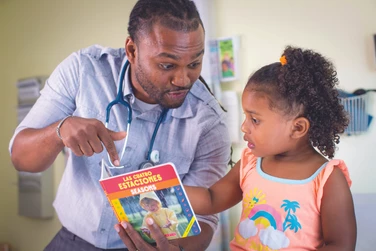
Reading in more than one language supports cognitive flexibility, problem-solving, and cultural understanding. Dual-language nonfiction strengthens language development and allows bilingual families and dual-immersion classrooms to explore environmental science together. Our Bilingual reversible titles take a unique approach to dual-language reading: one side presents the complete story in English, and when flipped over, the book tells the story in Spanish.
This Is the Sun / Este es el sol introduces young readers to fundamental energy cycles and the vital role sunlight plays in sustaining life on Earth through clear, accessible parallel narratives. By pairing bicultural literacy with foundational earth science, these reversible books empower young learners to communicate fluently about the natural world in two languages. Expand your dual-language library with additional reversible titles like This Is the Ocean / Este es el océano and Tiny Tern Takes Flight / El charrancito toma vuelo.

Historical Literacy
Narrative non-fiction teaches chronological sequencing, cause-and-effect structure, and historical context while showing kids that anyone can be a scientist.
Biographies and narrative non-fiction are essential tools for developing reading stamina in growing readers. The Science Wide Open series pairs vivid storytelling with rigorous scientific history. These books introduce children to groundbreaking female scientists throughout history—many of whom overcame immense societal barriers to change the world. By framing scientific milestones through human stories, we inspire the next generation of thinkers.

In Women in Medicine, readers explore the inspiring lives of female trailblazers who transformed healthcare, cured diseases, and saved millions of lives throughout history. By framing medical breakthroughs through human stories, young readers connect emotionally with historical achievements and see themselves as capable of changing the world. Continue exploring history and discovery with companion titles like Women in Biology, Women in Chemistry, Women in Physics, Women in Engineering, Women in Botany, and the Women in STEM Coloring Books.
Critical Thinking Literacy
Solving literary puzzles directly strengthens inference skills, critical analysis, and close-reading strategies—key components of advanced reading comprehension skills.
For upper elementary and middle-school readers (especially reluctant readers) long blocks of text can feel intimidating. The One Minute Mysteries series offers an engaging alternative by turning reading into an interactive game.
In One Minute Mysteries: 65 Short Mysteries You Solve With Math, each quick puzzle challenges readers to use clues hidden within a 150-word story to solve a real-world problem. Students must pay close attention to detail, evaluate evidence, and apply deductive logic to crack the case. Keep brainteasers going with 65 Short Mysteries You Solve With Science! and 65 More Short Mysteries You Solve With Science!.

Bring STEM Literacy to Your Home or Classroom
Literacy isn't just about learning how to read; it’s about using reading as a tool to explore the world. This National Literacy Month, step beyond traditional fiction and give your young readers books that spark lifelong curiosity.
Ready to start exploring?